
Your CRM Just Disappeared. Here Is What to Do Next.
If you logged into Practice.do one morning and saw the shutdown notice, you know the feeling.
Your stomach drops. Your client notes, your schedules, your payment history—it is all suddenly up in the air. You spent months setting up automations. You convinced your clients to use a portal. You finally had a rhythm. And now you are back to square one, shopping for software while trying to keep your business from falling apart.
That is not just inconvenient. It is exhausting.
You are a solo business owner. You do not have an IT department. You do not have time to test twelve platforms and watch tutorial videos for three weekends straight. You need a place to put your client list, track your conversations, and send invoices. You need it today. And you need to trust that it will still be here six months from now.
The Real Problem Is Not the Migration. It Is the Distrust.
When a platform shuts down, the damage is bigger than moving data. It makes you question every tool you use.
You start wondering: Is this new company stable? Will they ghost me too? Should I just go back to spreadsheets and accept the chaos?
That fear is valid. But going back to spreadsheets is not the answer. Spreadsheets do not remind you to follow up. They do not show you which deals are close to closing. They do not send invoices. They just hold data. They do not help you run your business.
What you need is not a perfect tool. You need a boring, reliable tool that shows up every day and does its job without drama.
What to Look for in a Practice.do Alternative
Before you sign up for the next shiny platform, take a breath and write down what you actually do all day.
You talk to leads. You follow up with people who went quiet. You send proposals. You do the work. You invoice. You get paid. That is it.
You do not need a tool that tries to be your website, your course platform, your email marketing system, and your life coach. You need a tool that handles the business part so you can focus on the work part.
Here is what matters:
Stability. You want a company that is not running on venture capital fumes. You want a tool that is profitable, focused, and not trying to sell itself to the highest bidder.
Simplicity. You are one person. You should be able to set up your pipeline in twenty minutes, not twenty days. If the onboarding requires a specialist, it is too complex for your business.
Follow-ups First. The main reason solo owners lose money is not bad marketing. It is forgotten follow-ups. Your next CRM should remind you who to call and when, without you building a automation flowchart.
Invoicing That Makes Sense. You should be able to turn a conversation into a proposal, then into an invoice, then into a paid notification—without leaving the same screen.
No Coaching Ghetto. Practice.do was built for coaches. That was great if you were a coach. But if you are a consultant, a fractional executive, a designer, or a solo agency owner, you were squeezing your square business into a round hole. Your next tool should fit service businesses broadly, not just one niche.
Why SOLOCRM Feels Different
We built SOLOCRM for people who are tired of being surprised by their software.
We are not a startup praying for an acquisition. We are a small Canadian company building a tool we actually use. That means no sudden shutdowns. No pivoting to enterprise. No feature bloat because a venture capitalist demanded growth.
Here is what that looks like in your day-to-day.
A Spreadsheet That Talks to You
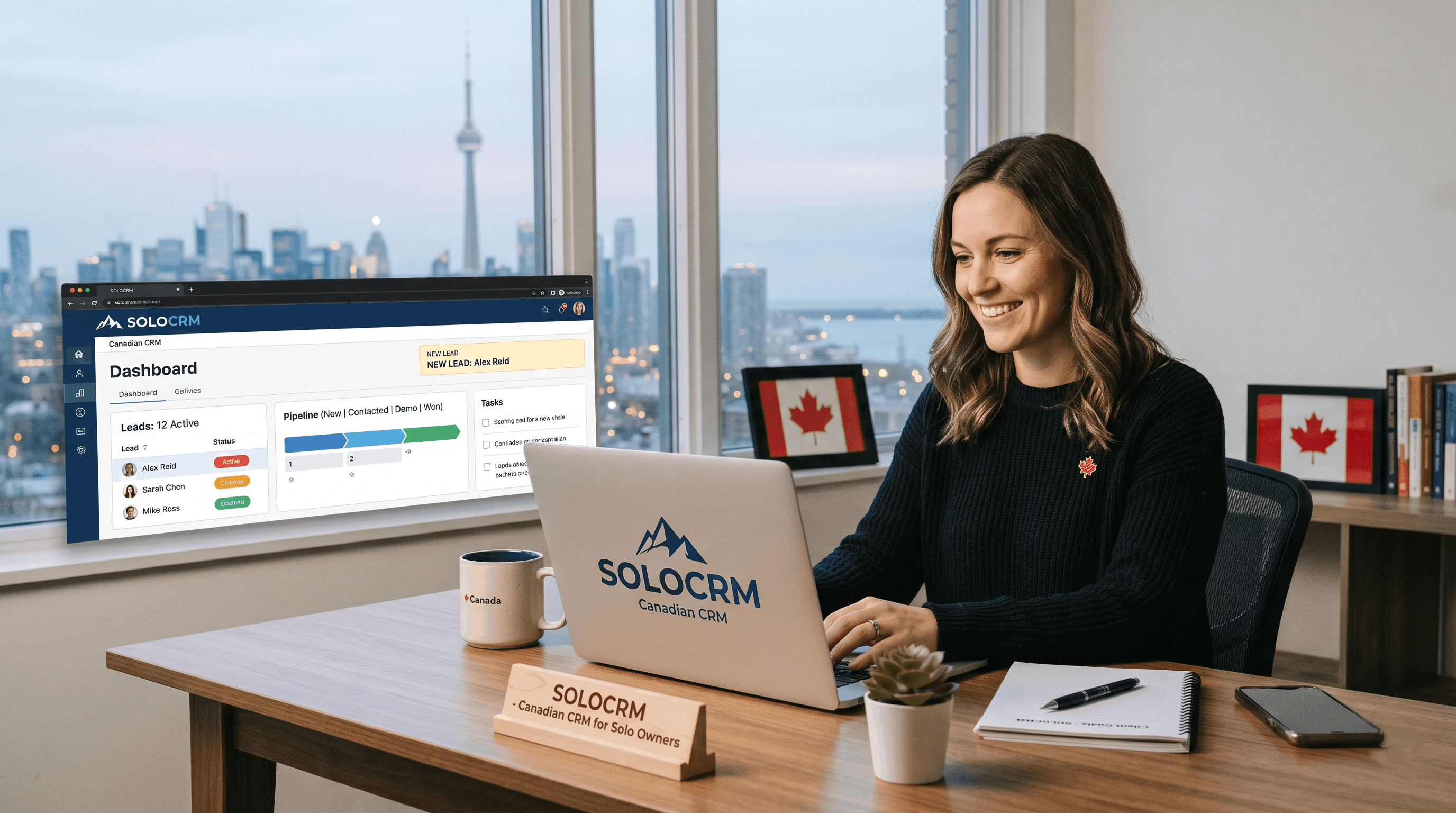
You already know how to use a spreadsheet. SOLOCRM looks like one. You see your leads in a clean table. You sort them. You filter them. You click to edit. But unlike Excel, it tells you who needs a follow-up today and why. It is familiar on purpose because you should spend your energy talking to clients, not learning a new interface.
A Pipeline That Does Not Overthink Your Process
We give you four stages: New, Talking, Proposed, Won. That is it. You can rename them if you want, but we cap it at four on purpose. You do not need seventeen custom stages and color-coded subcategories. You need to know who is new, who you are talking to, who got a proposal, and who paid. When you can see that at a glance, you know exactly where to spend your time.
Follow-Ups That Actually Happen
Every morning, SOLOCRM shows you a simple list. Here is who to follow up with. Here is why. Here is what you said last time. No digging through email threads. No scrolling through calendars. Just a list. When you check it off, the next reminder sets itself. Deals stop falling through the cracks because the system remembers so you do not have to.
From Conversation to Payment in One Place
You do not need a separate accounting program, a separate proposal tool, and a separate payment link. When a deal is ready, you create the invoice right from the conversation. If you are in Canada, we handle GST and HST automatically. Your tax number stays on every invoice. You always know what is paid, what is pending, and what is overdue. Your money stays as organized as your leads.
Built for Solo Businesses, Not Just Coaches
You might be a consultant. You might be a fractional CFO. You might be a designer or a developer or a marketing strategist. SOLOCRM does not force you into a coaching workflow. It is built for any solo service business that talks to people and sends invoices. That means the language makes sense, the fields are useful, and you are not trying to hide features you will never use.
The Switch Does Not Have to Be Painful
We know you are already tired from migrating once. That is why we made importing simple.
You can bring your contacts over in under two minutes. If you are not tracking your first lead within twenty minutes of signing up, we will hop on a screenshare and do it with you. No setup fees. No consulting upsells. No bots pretending to be support agents.
You have been through enough uncertainty. Getting your business organized again should be the easy part.
You Deserve a Tool That Just Works
You did not start your business to manage software. You started it to help people and get paid for your expertise.
Practice.do leaving you in the lurch was not your fault. But it is your chance to pick something simpler, sturdier, and built by people who understand what a solo business actually looks like.
You do not need another all-in-one platform that tries to run your entire life. You need a lightweight CRM that handles your follow-ups, your pipeline, and your invoicing—then gets out of your way.
Stop rebuilding your system every year. Start using something that will still be here when you check on it next year.
April 21, 2026